

A roof in Lancaster, NY has to manage changing conditions throughout the year: snow, freeze-thaw cycles, spring rain, summer heat, falling leaves, and occasional high winds. A seasonal maintenance routine helps residents spot small problems before they lead to leaks, interior damage, or premature roof replacement.
The most useful approach is not to inspect the roof constantly. Instead, check a few vulnerable areas at the right times of year and pay attention to changes inside the home.
What should be checked in early spring?
Early spring is the best time to look for damage caused by winter weather. Snow and ice can loosen shingles, damage flashing, clog drainage paths, and expose weak areas around roof penetrations.
From the ground, look for:
- Shingles that are missing, lifted, cracked, or noticeably out of place
- Dark streaks or exposed underlayment
- Metal flashing that appears bent, separated, or pulled away
- Sagging roof lines
- Gutter sections that have shifted or pulled loose
- Granules collecting heavily near downspout outlets
Spring rain can reveal problems that were not visible during winter. Check attic spaces, upper-floor ceilings, and walls near chimneys, vents, and skylights for dampness, staining, peeling paint, or a musty odor. A water stain may remain after the roof has dried, so it does not always indicate that a leak is active at the moment.
Do not assume a roof is sound simply because there was no visible indoor leak. Moisture can travel along framing before appearing inside, and some damage may remain hidden until the next heavy rain.
How should gutters and downspouts be handled?
Gutters and downspouts should move water away from the roof and foundation without overflowing. They generally need attention in spring and again after most leaves have fallen in autumn.
Check that:
- Gutters are securely attached and maintain a slight slope toward the downspouts
- Downspouts discharge water several feet away from the foundation where practical
- Extensions have not been crushed, disconnected, or buried by soil
- Water is not spilling over the front edge during rainfall
- Leaves, shingle granules, nests, and other debris are not blocking the flow
A small amount of debris can become a larger problem when it holds moisture against roof edges or creates ice during freezing weather. Clogged drainage can also send water behind fascia boards or down exterior walls.
Cleaning gutters involves ladders and slippery surfaces. Anyone performing the work should use stable equipment, avoid working during wet or windy conditions, and never lean a ladder directly against a gutter. If the roof edge is difficult to reach safely, the maintenance task should not be treated as a do-it-yourself requirement.
What should be done before summer?
Summer inspections focus on heat, ventilation, and storm readiness. Warm weather can make roof surfaces easier to examine, but hot shingles may be damaged by foot traffic, and walking on a roof can cause falls or dislodge roofing materials.
Look for signs of:
- Shingle edges curling upward
- Blistering, cracking, or excessive brittleness
- Failed sealant around vents and other roof openings
- Rust or corrosion on exposed metal components
- Moss or organic growth holding moisture against roofing materials
- Interior attic temperatures that seem unusually high
Proper attic ventilation helps release heat and moisture. Warning signs of ventilation or moisture problems may include damp insulation, rusty nails, condensation on roof sheathing, mold-like odors, or paint deterioration near upper ceilings.
Improving ventilation is not as simple as adding a powered fan. Intake and exhaust openings need to work together, and blocking existing vents with insulation can make conditions worse. Any changes should preserve the roof’s intended airflow and avoid creating openings that allow rain, snow, or insects into the attic.
Summer is also a useful time to trim branches that could scrape the roof or fall during a storm. Branches should not be cut from a roof edge or ladder position that creates a fall hazard.
Why is autumn an important maintenance season?
Autumn preparation helps reduce problems during snow and freezing weather. Leaves and small branches should be cleared from drainage systems before repeated freezes begin, and visible roof damage should be addressed before winter conditions make access more difficult.
Before winter, inspect:
- Roof valleys where leaves and water naturally collect
- Areas around chimneys, plumbing vents, and exhaust vents
- Flashing at wall intersections and roof edges
- Gutter seams and end caps
- Attic insulation and visible roof sheathing
- Areas beneath roof penetrations for old water stains
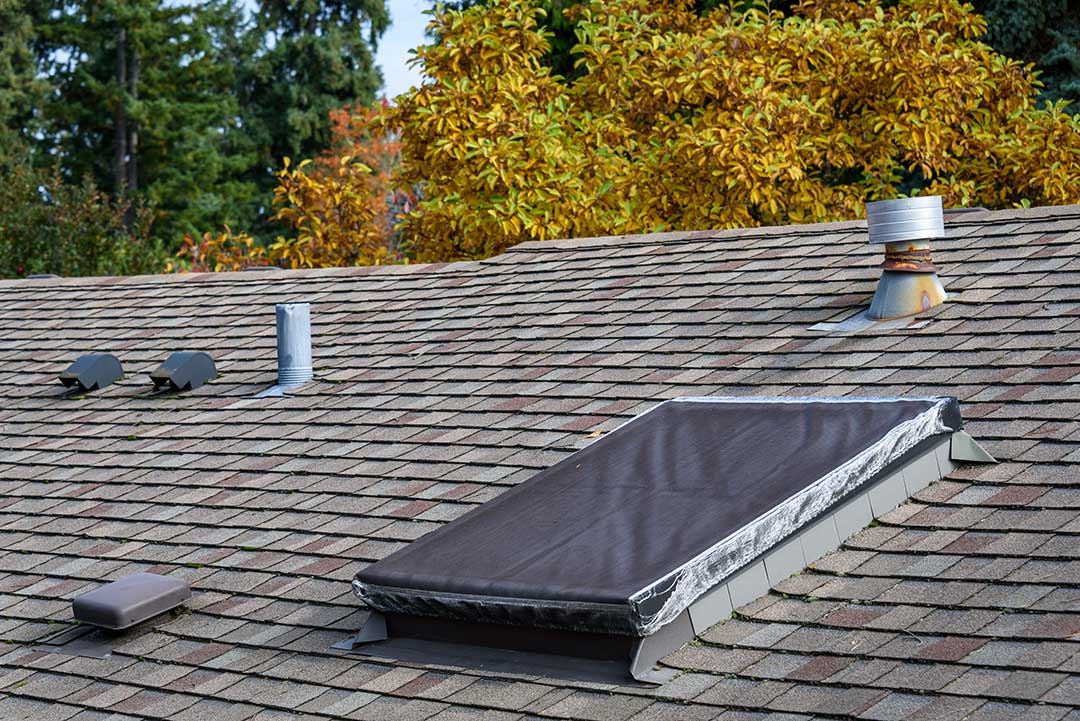
Roof valleys deserve special attention because they receive concentrated runoff. Debris left in a valley can slow drainage and keep roofing materials wet for extended periods.
Avoid piling leaves against the roof edge or using sharp tools that can cut shingles or damage protective coatings. Moss should not be scraped aggressively, since rough treatment can remove granules and shorten shingle life.
How can a roof be prepared for snow and ice?
Snow and ice are normal winter conditions, but certain warning signs deserve attention before temperatures remain below freezing. Poor drainage, blocked ventilation, and uneven roof temperatures can contribute to ice buildup along eaves.
Before winter, confirm that:
- Gutters and downspouts are clear
- Attic insulation is not blocking soffit or intake vents
- Bathroom and kitchen exhaust ducts discharge outdoors rather than into the attic
- Flashing and roof penetrations appear intact
- Loose outdoor items cannot strike the roof during wind
- Tree limbs near the roof are not dead, weak, or heavily overhanging
Ice dams are often misunderstood. They form when heat escapes into the attic and warms portions of the roof, causing snow to melt and refreeze near colder eaves. Repeatedly removing snow from the roof does not correct the underlying heat or airflow problem.
Roof raking can also be hazardous and may damage roofing materials if done incorrectly. Heavy snow loads, large ice formations, or active leaks during winter should not be handled by climbing onto the roof. Roof surfaces may be icy even when they look dry.
Which roof problems require prompt attention?
Some conditions can wait for a planned inspection, while others should be addressed quickly. Prompt attention is appropriate for:
- Water entering the living space
- A visibly sagging roof area
- Large sections of missing or displaced shingles
- Damaged flashing around a chimney or vent
- A fallen branch or other impact damage
- Exposed roof decking or underlayment
- Electrical fixtures or wiring affected by water
Place a container under an active drip if necessary, but avoid cutting into a ceiling or touching wet electrical components. If water is near a light fixture, outlet, or wiring, shut off power only if it can be done safely and keep clear of the area.
A roof inspection should also be considered after a severe windstorm, even when damage is not obvious from the ground. Small openings can allow water into insulation or framing before interior staining appears.
How often should a homeowner inspect the roof?
A practical schedule is a ground-level check in spring and autumn, plus additional observations after major storms. Attic areas can be checked at the same time for moisture, daylight showing through the roof deck, damaged insulation, or unusual odors.
Not every roof needs the same maintenance interval. Age, slope, roofing material, nearby trees, attic design, and the condition of drainage components all affect how frequently problems develop. Homes with older roofing, heavy shade, or recurring ice buildup may require closer observation than homes with newer materials and unobstructed drainage.
The goal is not to climb onto the roof repeatedly. Consistent visual checks, safe gutter maintenance, and early attention to leaks provide a more reliable routine for protecting the roof through Lancaster’s changing seasons.
