
Why do roofing terms matter?
Understanding basic roofing language helps homeowners describe problems accurately, compare repair recommendations, and recognize conditions that may need prompt attention. A roof is more than the visible shingles. It is a layered system designed to shed water, manage airflow, resist weather, and protect the structure below.
In Lancaster, NY, roofs commonly experience snow, ice, wind, rain, freeze-thaw cycles, and occasional heavy storms. Those conditions make it useful to understand how roofing components work together and what different types of damage may mean.
What are the main parts of a roof?
A typical sloped roof includes several layers and components:
- Roof deck: The structural surface beneath the underlayment and shingles. It is often made from plywood or oriented strand board. Soft, swollen, or deteriorated decking can indicate long-term moisture exposure.
- Underlayment: A water-resistant layer installed over the roof deck and beneath the shingles. It provides additional protection if wind-driven rain or melting snow gets beneath the outer roofing material.
- Shingles: The exposed roofing material arranged in overlapping courses. Asphalt shingles are common, but roofs may also use metal, wood, slate, or other materials.
- Ridge: The highest horizontal line where two sloping roof planes meet.
- Hip: An outside angle where two sloping roof planes meet.
- Valley: An inside angle where two roof planes meet. Valleys collect and direct substantial amounts of water, so they are frequent areas for wear and leakage.
- Eave: The lower edge of a sloped roof, where water typically drains into gutters.
- Rake: The sloped edge along the end of a gable roof.
- Fascia: The vertical trim board along the roof edge, often behind or beside the gutters.
- Soffit: The underside of the eaves. Vented soffits can allow air to enter the attic.
These terms are useful when looking at inspection photographs or discussing the location of a visible defect.
What is roof flashing, and why does it leak?
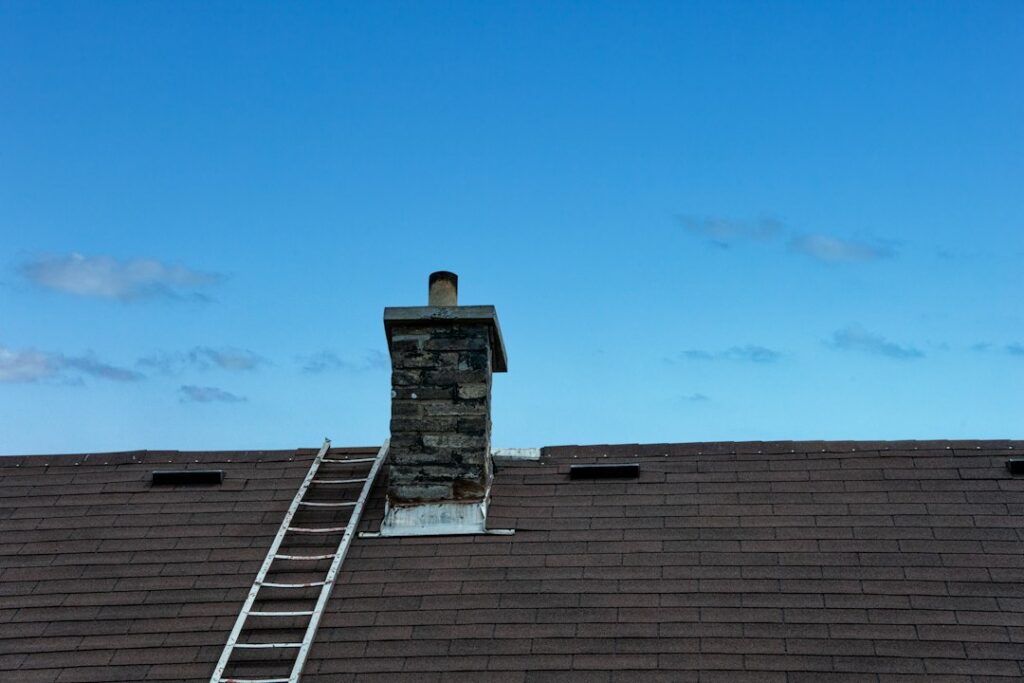
Flashing is thin, water-resistant material installed around roof interruptions and joints. It directs water away from vulnerable seams rather than allowing water to flow into them.
Common flashing locations include:
- Chimneys
- Plumbing vent pipes
- Wall intersections
- Skylights
- Valleys
- Roof edges
- Dormers and other raised roof sections
Flashing may be made from metal, flexible membrane, or purpose-designed roofing materials. A leak near a ceiling stain does not always begin directly above the stain. Water can travel along the roof deck, framing, or insulation before becoming visible indoors.
A small opening in flashing can become more troublesome during wind-driven rain or during freeze-thaw weather, when trapped moisture expands and contracts. Flashing should be evaluated as part of the surrounding roof system rather than treated as an isolated piece of trim.
What do roof ventilation terms mean?
Roof ventilation helps control heat and moisture in the attic. A balanced system generally has intake ventilation near the lower roof edges and exhaust ventilation near the upper portion of the roof.
Important terms include:
- Soffit vent: An intake opening located under the eaves.
- Ridge vent: A continuous or partial exhaust vent installed along the roof ridge.
- Static vent: A non-powered exhaust vent that allows warm, moist air to leave the attic.
- Powered attic ventilator: A fan-assisted device that moves attic air.
- Baffle: A channel that helps preserve airflow from a soffit vent into the attic.
- Ice dam: A ridge of refrozen water that forms near the lower edge of a roof when snow melts higher on the roof and refreezes near the eaves.
Poor ventilation does not automatically cause every roofing problem, and adding vents without adequate intake airflow may not solve the underlying issue. Ventilation should work with insulation, air sealing, and proper roof design.
What is an ice dam?
An ice dam is a buildup of ice along the lower edge of a roof that prevents melting snow from draining normally. Water may then move beneath shingles and into the roof assembly.
Ice dams are more likely when:
- Heat escapes from the living space into the attic.
- Snow remains on colder roof edges.
- Attic insulation is uneven or insufficient.
- Air leaks exist around light fixtures, attic access panels, ducts, or chimneys.
- Weather repeatedly moves above and below freezing.
Ice dams are not simply a gutter problem. Gutters may become involved, but the underlying conditions often include heat loss, airflow, roof geometry, and weather patterns. Removing snow or ice from a roof can also be hazardous and may damage shingles if done improperly.
What is the difference between a roof leak and roof condensation?
A roof leak occurs when liquid water enters through a failure or opening in the roof system. Condensation occurs when warm, moist air contacts a cold surface and changes into liquid water.
Both problems can produce:
- Brown ceiling stains
- Damp insulation
- Musty odors
- Peeling paint
- Mold-like spotting
- Wet roof framing

Condensation is more likely in cold weather when attic air is humid and ventilation or air sealing is inadequate. The location of a stain alone does not prove whether the cause is a roof leak, plumbing issue, ice dam, or condensation. Diagnosis requires examining the attic and exterior roof conditions.
What do shingle terms such as granules, tabs, and blistering mean?
Granules are the small, mineral-like particles attached to the surface of asphalt shingles. They add color and help protect the shingle from sunlight and weather. Some granule loss is expected as shingles age, but large amounts in gutters or bare patches on shingles deserve attention.
A shingle tab is the visible lower portion of an individual strip-style shingle. Tabs create the familiar patterned appearance across the roof.
Blistering describes raised areas on a shingle surface, often associated with moisture or trapped air within the roofing material. Blisters may remain intact or break open, exposing the underlying layers.
Other terms homeowners may hear include:
- Curling: Shingle edges or corners lift upward.
- Buckling: Shingles appear wavy or uneven across the roof surface.
- Cracking: The shingle surface splits, often from age or weather exposure.
- Missing shingles: Entire shingles or sections have been removed by wind or deterioration.
- Exposed fasteners: Nails or screws are visible where they should be covered or sealed.
Not every irregularity means the entire roof must be replaced. The pattern, age, extent, and location of the damage all matter.
What is roof slope or pitch?
Roof pitch describes how steeply a roof rises compared with how far it extends horizontally. It may be expressed as a ratio, such as 6-in-12, meaning the roof rises 6 inches for every 12 inches of horizontal distance.
Pitch affects:
- How quickly water and snow shed
- Which roofing materials are suitable
- How much surface area the roof has
- How easy or dangerous the roof is to walk on
- How flashing and ventilation are designed
A steep roof is not automatically in better condition than a low-slope roof. Low-slope sections require especially careful water management because they drain more slowly and may use different materials than the main roof.
Which roofing warning signs should not be ignored?
Some signs deserve prompt attention because continued moisture can affect insulation, framing, ceilings, and interior finishes:
- Water entering during or after rain
- Sagging roof areas
- Large sections of missing or displaced shingles
- Exposed roof deck
- Widespread dark or damp attic materials
- Rusted or separated flashing
- Persistent ceiling stains that grow or return
- Daylight visible through the roof deck
- Heavy granule accumulation in gutters
- Ice buildup associated with interior water damage
Roof work can involve steep surfaces, unstable materials, electrical hazards, and hidden structural damage. If active water intrusion, sagging, or unsafe access is present, avoiding the roof area is the safest choice until the condition can be properly evaluated.
Why should homeowners keep a roof vocabulary record?
Keeping notes in plain language can make future maintenance easier. A homeowner might record that water appeared near a chimney during a rainstorm, that granules collected below one roof slope, or that a shingle section lifted after high wind.
Photos taken from the ground, dates of visible changes, and records of past repairs can also help identify whether a condition is new, recurring, or gradually worsening. Clear terminology does not replace an inspection, but it helps homeowners ask better questions and understand the answers.
